
Dr. Ashish Gupta Urology
Expert Urologist in Andheri, Mumbai
MBBS, MS (Gold Medal), MCh Urology — 15+ years treating kidney, prostate, bladder & male reproductive conditions with minimally invasive, laser-based procedures across 4 Mumbai hospitals.
Kidney stones are one of the most common urological conditions, affecting millions of people worldwide. Although modern treatment options can successfully remove kidney stones, many people are surprised to learn that the condition can return. Experiencing a kidney stone once significantly increases the likelihood of developing another in the future, especially if the underlying causes are not addressed. Fortunately, adopting healthy lifestyle habits and following your doctor’s recommendations can greatly reduce the risk of kidney stone recurrence.
Understanding why kidney stones come back and learning how to prevent them can help you protect your kidneys, avoid severe pain, and reduce the need for future medical procedures.
Why Do Kidney Stones Come Back?
Kidney stones recur because the conditions that caused them in the first place often remain unchanged. Factors such as dehydration, unhealthy eating habits, excessive salt intake, obesity, certain metabolic disorders, and a family history of kidney stones can continue to increase the concentration of minerals in the urine. Over time, these minerals crystallize and form new stones.
People who have had one kidney stone are generally at a higher risk of developing another within the next few years. Identifying the type of kidney stone and understanding its cause allows your urologist to recommend personalized prevention strategies.
How Common Is Kidney Stone Recurrence?
Medical studies suggest that without preventive measures, many patients experience another kidney stone within five to ten years after their first episode. However, by making appropriate dietary and lifestyle changes and attending regular follow-up appointments, the likelihood of recurrence can be significantly reduced.
What Increases the Risk of Recurrent Kidney Stones?
Several factors contribute to recurrent kidney stones. Inadequate water intake is one of the leading causes because concentrated urine allows minerals such as calcium, oxalate, and uric acid to crystallize. A diet rich in sodium, processed foods, animal protein, and sugary beverages can also increase the risk. Certain medical conditions, including obesity, diabetes, gout, hyperparathyroidism, and chronic urinary tract infections, may further contribute to stone formation. Some individuals also have a genetic predisposition, making regular monitoring even more important.
How Can You Prevent Kidney Stones from Coming Back?
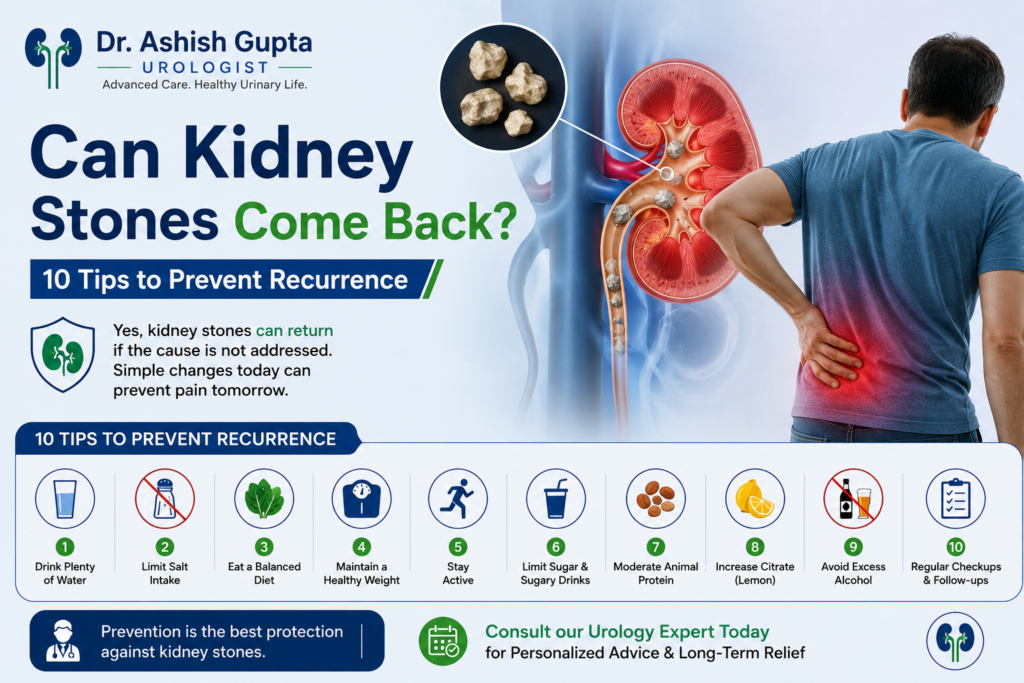
Preventing kidney stone recurrence requires a long-term commitment to healthy habits rather than a temporary change after treatment. The following strategies are among the most effective ways to protect your kidneys.
Stay Well Hydrated Every Day
Drinking enough water is the most effective way to prevent kidney stones from returning. Proper hydration dilutes urine and reduces the concentration of minerals that can form crystals. Most adults should aim to drink enough fluids to produce clear or pale-yellow urine throughout the day. Your doctor may recommend a higher fluid intake if you have previously experienced recurrent stones.
Follow a Kidney-Friendly Diet
A balanced diet plays a major role in kidney stone prevention. Eating fresh fruits, vegetables, whole grains, and moderate amounts of lean protein helps maintain healthy urine composition. Reducing highly processed foods and choosing nutrient-rich meals can lower your risk of future stone formation while supporting overall kidney health.
Reduce Salt Intake
Excess sodium causes the kidneys to excrete more calcium into the urine, increasing the chance of calcium stone formation. Limiting processed foods, packaged snacks, fast food, and heavily salted meals can help reduce this risk and improve both kidney and heart health.
Maintain a Healthy Calcium Intake
Many people mistakenly believe they should completely avoid calcium after developing kidney stones. In reality, dietary calcium obtained from foods such as milk, yogurt, and cheese helps bind oxalate in the digestive system and may actually reduce the risk of certain kidney stones. Calcium supplements, however, should only be taken under medical supervision.
Limit Foods High in Oxalates
Some kidney stones are formed from calcium oxalate. If you are prone to these stones, your doctor may recommend limiting foods such as spinach, beetroot, chocolate, nuts, tea, and rhubarb. Rather than eliminating these foods completely, they are usually consumed in moderation as part of a balanced diet.
Moderate Your Animal Protein Intake
Eating excessive amounts of red meat, poultry, and seafood can increase uric acid levels and make stone formation more likely in susceptible individuals. Choosing balanced portions and including plant-based protein sources can support kidney health while still meeting your nutritional needs.
Maintain a Healthy Body Weight
Being overweight or obese increases the risk of kidney stones by affecting metabolism and urine chemistry. Regular physical activity combined with a healthy diet supports weight management and reduces the likelihood of stone recurrence.
Manage Underlying Health Conditions
Conditions such as diabetes, gout, high blood pressure, and metabolic disorders can increase the risk of kidney stone formation. Proper medical management and regular follow-up with your healthcare provider are essential for long-term prevention.
Take Prescribed Medications as Directed
Some people require medication to reduce stone formation, depending on the type of kidney stone they develop. These medications may help regulate urine chemistry, reduce calcium or uric acid levels, or prevent crystal formation. Always follow your urologist’s instructions and never stop medication without medical advice.
Schedule Regular Follow-Up Appointments
Routine follow-up visits allow your urologist to monitor your kidney health through urine tests, blood tests, or imaging studies when necessary. Regular monitoring helps detect small stones before they become larger and cause symptoms, making treatment simpler and more effective.
What Are the Early Signs That a Kidney Stone May Be Returning?
Recognizing early symptoms can lead to faster diagnosis and treatment. Warning signs include persistent pain in the back or side, pain that spreads to the lower abdomen or groin, blood in the urine, burning during urination, frequent urination, nausea, vomiting, fever accompanied by urinary symptoms, or difficulty passing urine. Seeking prompt medical attention can help prevent complications.
When Should You See a Urologist?
If you have experienced kidney stones in the past, regular consultations with a urologist are important even when you feel well. You should seek immediate medical attention if you develop severe pain, persistent vomiting, fever with chills, blood in the urine, or difficulty passing urine. Early diagnosis and treatment can prevent kidney damage and reduce the risk of further complications.
Frequently Asked Questions (FAQs)
- Can kidney stones come back after treatment?
Yes. Even after successful treatment, kidney stones can recur, especially if the underlying causes such as dehydration, poor diet, or metabolic disorders are not addressed.
- What is the best way to prevent kidney stones from recurring?
The most effective prevention strategies include staying well hydrated, eating a balanced diet, reducing salt intake, maintaining a healthy weight, and following your urologist’s recommendations.
- How much water should I drink to prevent kidney stones?
The amount varies from person to person, but many adults are advised to drink enough fluids to produce at least 2–2.5 liters of urine each day. Your doctor can recommend the right amount based on your health and stone type.
- Are all kidney stones caused by diet?
No. While diet is an important factor, genetics, medical conditions, medications, and metabolic disorders can also contribute to kidney stone formation.
- How often should I see a urologist after kidney stone treatment?
The frequency of follow-up depends on your medical history and risk factors. Your urologist will recommend a schedule that may include urine tests, blood tests, or imaging to monitor your kidney health.
- Can kidney stones come back after surgery?
Yes. Surgery removes existing stones but does not eliminate the underlying factors that can cause new stones to form. - What foods help prevent kidney stones?
A diet rich in fruits, vegetables, whole grains, adequate dietary calcium, and plenty of water can help reduce the risk of kidney stone recurrence. - What are the first signs of a recurring kidney stone?
Early symptoms may include pain in the back or side, blood in the urine, burning during urination, frequent urination, and nausea. - Can drinking more water prevent kidney stones?
Yes. Adequate hydration is one of the most effective ways to dilute urine and reduce the formation of kidney stones. - When should I consult a urologist for kidney stones?
You should consult a urologist if you experience severe pain, blood in the urine, repeated kidney stones, fever with urinary symptoms, or difficulty passing urine.