
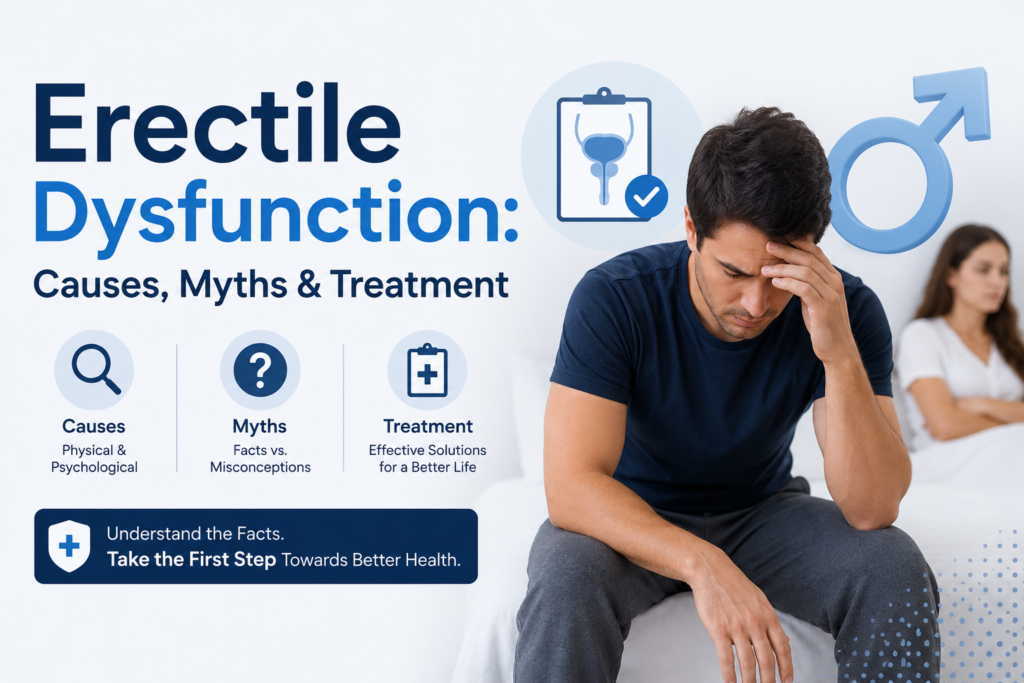
Erectile Dysfunction (ED): Causes, Myths & Modern Treatment
Dr. Ashish Gupta Urology
Expert Urologist in Andheri, Mumbai
MBBS, MS (Gold Medal), MCh Urology — 15+ years treating kidney, prostate, bladder & male reproductive conditions with minimally invasive, laser-based procedures across 4 Mumbai hospitals.
Erectile dysfunction is far more common than most men realise — and far more treatable, too. Yet because it touches on something deeply personal, many men suffer in silence for years, feeling embarrassed or assuming nothing can be done. As a urologist and andrologist, I want to share two important messages right away. First: ED is a medical condition, not a personal failing, and it can almost always be helped. Second — and this surprises many people — ED is often an early warning sign of a bigger health problem, so getting it checked can protect much more than your sex life. Let’s look at the real causes, the myths, and what treatment involves.
What is erectile dysfunction?
Erectile dysfunction (ED) is the persistent difficulty in getting or keeping an erection firm enough for satisfactory sexual intercourse. The word persistent matters — an occasional off night, due to tiredness, stress, or alcohol, is completely normal and not ED. It’s when the problem happens repeatedly over time that it’s worth seeing a doctor.
ED is more common than you think
Although ED becomes more common with age, it is not an “old man’s problem” — men of any age can experience it, including men in their 20s and 30s. It affects a huge number of men worldwide, which means if you’re dealing with it, you are far from alone.
Why ED can be an important warning sign
This is the point I most want men to understand. An erection depends on healthy blood flow, and the arteries supplying the penis are small. When blood vessels throughout the body begin to narrow (as happens in heart disease and diabetes), these small arteries are often affected first. This is why doctors sometimes call ED the “check-engine light” for the heart — it can appear three to five years before a heart attack or other cardiovascular problem. ED is also strongly linked to diabetes and often shows up earlier in diabetic men. So rather than something to hide, ED can be a valuable early alarm — a reason to have your heart, blood sugar, blood pressure, and cholesterol checked.
What causes erectile dysfunction?
The causes fall into a few groups, and often more than one is involved:
- Physical causes (common, especially with age): poor blood flow and vascular disease, diabetes, high blood pressure, high cholesterol, heart disease, obesity, low testosterone, nerve problems, Peyronie’s disease, and pelvic injury or surgery.
- Medications: some blood pressure drugs, antidepressants, and others can contribute.
- Psychological causes (especially in younger men): stress, anxiety (including performance anxiety), depression, and relationship difficulties.
- Lifestyle factors: smoking, excessive alcohol, and recreational drug use.
Common myths about ED
Let me clear up some damaging myths I hear often:
- “ED only affects older men.” False — it can affect men at any age.
- “It’s all in your head.” False — while psychological factors play a role, ED is very often physical.
- “ED is harmless.” False — it can be an early warning sign of heart disease or diabetes.
- “It means I’m not attracted to my partner.” False — the cause is far more likely to be medical.
- “It’s just part of ageing I have to accept.” False — ED is treatable at any age.
How is ED diagnosed?
Diagnosis is straightforward and handled with complete discretion. I take a careful history, perform an examination, and order blood tests to check blood sugar, cholesterol, and testosterone levels. Because of the heart connection, I also assess cardiovascular risk. This not only identifies the cause of the ED but can uncover hidden conditions early.
How is ED treated?
The good news is that ED responds very well to treatment, and the approach is tailored to the cause:
- Treating the underlying cause and lifestyle changes — quitting smoking, losing weight, exercising, and controlling diabetes, blood pressure, and cholesterol can significantly improve, and sometimes even reverse, ED.
- Oral medications — these are effective for most men, but they must be prescribed and supervised by a doctor, as they can be dangerous if you take certain heart medicines (especially nitrates).
- Counselling or therapy — valuable when stress, anxiety, or relationship issues are involved.
- Testosterone therapy — if a hormone deficiency is found.
- Other options — such as injections, vacuum devices, or penile implants for more severe or resistant cases.
A word of caution: don’t self-medicate
Please avoid buying ED pills or “boosters” from the internet or over the counter. They can be unsafe, may interact dangerously with other medicines, and — just as importantly — self-medicating means you miss the chance to detect an underlying heart or diabetes problem. A proper consultation is safer and far more effective.
Confidential, expert care at Dr. Ashish Gupta’s clinic
There is no need to feel embarrassed, and no need to suffer in silence. I offer discreet, professional, and judgement-free evaluation and treatment for erectile dysfunction, addressing both the symptom and any underlying cause. I consult at Holy Spirit and Sanjeevani Mamta Hospitals in Andheri East and All Cure Hospital, Jogeshwari.
📞 Book a confidential consultation: +91 98330 72976 · Dr. Ashish Gupta, Urologist & Andrologist — Andheri, Mumbai
Frequently Asked Questions
- Is erectile dysfunction curable?
In many cases, yes. ED is highly treatable, and addressing the underlying cause — along with lifestyle changes — can significantly improve or even reverse it. - Can young men get erectile dysfunction?
Yes. ED can affect men of any age. In younger men, psychological factors like stress and anxiety are common causes, though physical causes also occur. - Is ED a sign of heart disease?
It can be. Because the penile arteries are small, ED often appears before heart disease becomes obvious — sometimes years earlier. This is why men with ED should have their heart health checked. - What is the main cause of erectile dysfunction?
The most common physical causes are poor blood flow, diabetes, high blood pressure, and high cholesterol. Psychological and lifestyle factors also contribute. - Are ED pills safe?
Prescription ED medicines are effective but must be taken under medical supervision, as they can be dangerous with certain heart medicines. Avoid buying pills online without a doctor. - Does diabetes cause erectile dysfunction?
Yes. ED is common in men with diabetes and often occurs earlier, due to effects on blood vessels and nerves. Good diabetes control helps. - When should I see a doctor for ED?
If the problem is persistent or recurring. Seeing a urologist not only helps treat ED but can detect underlying conditions like heart disease or diabetes early.