
Dr. Ashish Gupta Urology
Expert Urologist in Andheri, Mumbai
MBBS, MS (Gold Medal), MCh Urology — 15+ years treating kidney, prostate, bladder & male reproductive conditions with minimally invasive, laser-based procedures across 4 Mumbai hospitals.
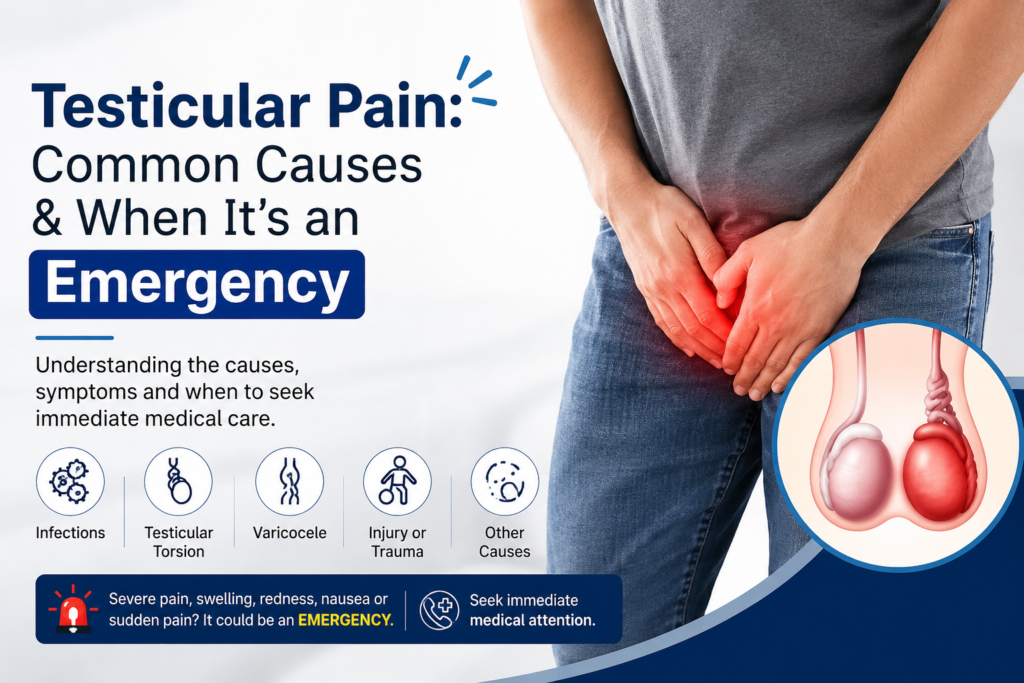
Testicular pain is a symptom that should never be ignored. While mild discomfort may result from a minor injury or temporary strain, persistent or severe pain can indicate a serious medical condition requiring immediate attention. The testicles are highly sensitive organs that play a crucial role in male reproductive health by producing sperm and testosterone. Any pain affecting one or both testicles may interfere with daily activities and, in some cases, threaten fertility if not treated promptly.
The severity of testicular pain can vary from a dull ache to sudden, intense pain. It may develop gradually or occur unexpectedly and can be accompanied by swelling, redness, fever, nausea, or urinary symptoms. Understanding the possible causes and knowing when to seek medical care can help prevent complications and ensure timely treatment.
What Is Testicular Pain?
Testicular pain refers to discomfort or pain that occurs in one or both testicles or the surrounding scrotum. The pain may originate directly from the testicle or may be referred from nearby structures such as the groin, kidneys, or lower abdomen. Some men experience occasional mild discomfort, while others may develop severe pain that requires emergency medical evaluation.
Pain lasting more than a few hours, recurring discomfort, or pain associated with swelling or fever should always be evaluated by a qualified urologist.
Why Is Testicular Health Important?
The testicles are responsible for producing sperm and the hormone testosterone, both of which are essential for male fertility and overall health. Healthy testicles support reproductive function, hormonal balance, and sexual development. Conditions affecting the testicles can lead to chronic pain, infertility, infection, or permanent damage if diagnosis and treatment are delayed.
Regular self-awareness, prompt attention to unusual symptoms, and routine medical checkups play an important role in protecting long-term testicular health.
What Are the Common Causes of Testicular Pain?
Several medical conditions can cause testicular pain, ranging from minor problems to serious emergencies. One of the most urgent causes is testicular torsion, a condition in which the spermatic cord twists and cuts off the blood supply to the testicle. This typically causes sudden, severe pain accompanied by swelling, nausea, and vomiting. Testicular torsion is a surgical emergency, and treatment within a few hours offers the best chance of saving the affected testicle.
Another common cause is epididymitis, which is inflammation of the epididymis, the tube that stores and carries sperm. It is often caused by bacterial infections, including sexually transmitted infections in younger men or urinary tract infections in older men. Symptoms usually include gradual pain, swelling, redness, fever, and discomfort during urination.
Orchitis, or inflammation of the testicle, may develop due to viral or bacterial infections. Mumps is a well-known viral cause of orchitis. Men with orchitis often experience swelling, tenderness, fever, and pain in one or both testicles.
A varicocele occurs when veins within the scrotum become enlarged. Although it may not always cause symptoms, some men experience a dull aching pain that worsens after prolonged standing or physical activity. Varicoceles are also associated with reduced fertility in some cases.
A hydrocele, which is the buildup of fluid around the testicle, can cause swelling and a feeling of heaviness in the scrotum. While hydroceles are usually painless, larger ones may produce discomfort and require treatment if they interfere with daily activities.
An inguinal hernia can also lead to pain that extends into the scrotum. This condition develops when tissue protrudes through a weak area of the abdominal wall and may become painful, particularly during lifting, coughing, or physical exertion.
Testicular trauma resulting from sports injuries, accidents, or direct impact can produce immediate pain and swelling. Although many minor injuries improve with rest, severe trauma requires prompt medical evaluation to rule out internal damage.
In some cases, pain may originate from kidney stones, urinary tract infections, or nerve-related conditions, causing discomfort that radiates into the testicle even though the testicle itself is healthy.
What Are the Symptoms Associated With Testicular Pain?
The symptoms accompanying testicular pain often provide important clues about the underlying condition. Some men experience sudden, severe pain, while others notice a gradual increase in discomfort over several days. Swelling of the scrotum, redness, warmth, tenderness, fever, nausea, vomiting, painful urination, blood in the urine, or unusual discharge may occur depending on the cause. The presence of these symptoms should never be ignored, particularly if the pain is severe or persistent.
When Is Testicular Pain Considered an Emergency?
Not every case of testicular pain is an emergency, but certain symptoms require immediate medical attention. Sudden, severe pain without an obvious cause should always be treated as an emergency because it may indicate testicular torsion. Delay in treatment can permanently damage the testicle due to loss of blood supply.
Pain associated with rapid swelling, high fever, persistent vomiting, severe injury, blood in the urine, or a hard lump within the testicle also requires urgent evaluation. Early diagnosis significantly improves treatment success and reduces the risk of complications such as infertility or permanent tissue damage.
How Is Testicular Pain Diagnosed?
Diagnosing the cause of testicular pain begins with a detailed discussion of symptoms, medical history, and a physical examination performed by a urologist. The doctor may recommend urine tests to identify infection, blood tests to detect inflammation, or screening for sexually transmitted infections when appropriate.
Scrotal ultrasound with Doppler imaging is one of the most valuable diagnostic tools because it evaluates blood flow to the testicles and helps identify conditions such as torsion, epididymitis, hydrocele, varicocele, or tumors. Additional imaging studies may be required if the pain is suspected to originate from the kidneys or abdomen.
Frequently Asked Questions (FAQs)
- What is the most common cause of testicular pain?
Common causes include epididymitis, testicular torsion, orchitis, varicocele, hydrocele, trauma, and inguinal hernia.
- When should I go to the emergency room for testicular pain?
Seek emergency medical care immediately if you experience sudden, severe testicular pain, swelling, nausea, vomiting, or pain after a serious injury, as these may indicate testicular torsion.
- Can testicular pain go away on its own?
Minor pain caused by a mild injury may improve with rest, but persistent or severe pain should always be evaluated by a urologist to rule out serious conditions.
- Can kidney stones cause testicular pain?
Yes. Pain from kidney stones can radiate to the groin and testicles due to shared nerve pathways, even though the testicles themselves are not affected.
- Can testicular pain affect fertility?
Yes. Conditions such as testicular torsion, severe infections, or untreated varicoceles may affect fertility if diagnosis and treatment are delayed.
- Is testicular pain always serious?
Not always, but sudden or persistent testicular pain should never be ignored because it may indicate a condition requiring urgent medical treatment. - What are the warning signs of testicular torsion?
Sudden severe pain, rapid swelling, nausea, vomiting, and a testicle positioned higher than usual are classic warning signs that require immediate emergency care. - Which doctor should I consult for testicular pain?
A urologist specializes in diagnosing and treating conditions affecting the urinary tract and male reproductive system, including testicular pain. - Can infections cause testicular pain?
Yes. Epididymitis and orchitis are common infections that can cause pain, swelling, fever, and tenderness in the testicles. - How is testicular pain diagnosed?
Diagnosis typically includes a physical examination, urine and blood tests, and a scrotal ultrasound with Doppler imaging to determine the underlying cause.